by Natalie
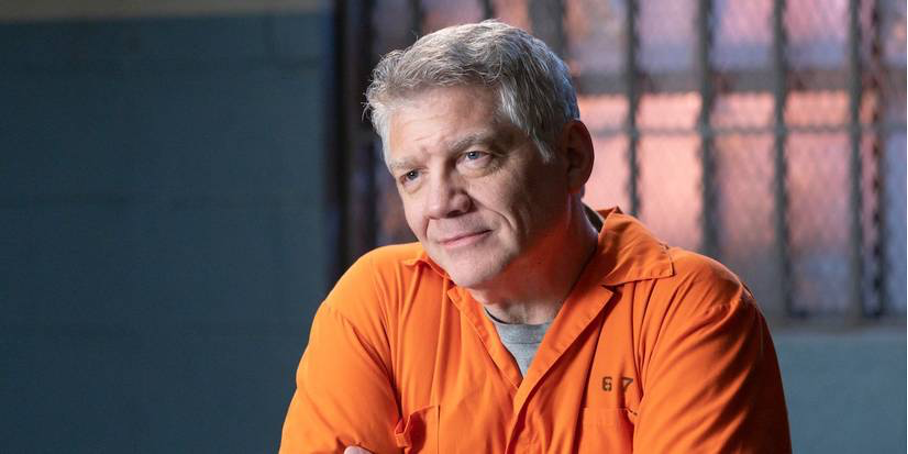
Oscar Hutchinson’s portrayal on the cop show “The Rookie” consolidates the justification of the penal system. His crimes emphasise the danger criminals pose to the general population. Seeing him in handcuffs after he stabbed a beloved character filled me with great satisfaction. I felt that justice was now served.
“The Rookie” combines lovable police officers with discussions of police reform and follows the narrative “arrests make the streets safer”, in line with the liberal governance’s understanding of legality promoting safety. This mixture allowed me to validate my internalised notions of justice and to feel morally superior – not only to the criminals whose actions I disapproved of, but through the characters’ criticism of the unjust criminal justice system, too.
My main thought was: People have the choice about breaking the law. If you do not want to go to prison, be a law-abiding citizen, easy as that. “The Rookie” supported this view. But this thought embarrasses me now. Because I never stopped to ask one question: Why do people break the law? Cop shows highlight the (moral) corruption of individuals, part of the liberal justification of the carceral system. Law enforcement justifies incarceration by highlighting the bad decision an individual made, a narrative also found in real prison culture (McKeithen, 2022).
However, shifting the blame onto individuals allowed me to ignore my privileges and continually support an oversimplified understanding of justice. Because I was never in a position where structural inequalities forced me to break the law to meet basic needs.
This realisation and confrontation with my privileges shifted my view on cop shows and prisons. As entertainment choices mirror and reinforce deep-rooted and internalised convictions (Bennett and Knight, 2021, 1), I now understand how watching cop shows continuously re-established my desire for a liberal order rather than the realisation of justice. Cop shows are multi-seasonal because they do not resolve violence; they perpetuate it. While making me, the viewer, feel good about myself. Because punishment fits the arc of an episode, justice unfolds over time.
Although I still feel drawn to “The Rookie”, I now confront the limitations that cop shows have imposed on my view of justice. Understanding crime not as an isolated action, but as a consequence of many factors, I am left with the question: Are prisons necessary (Kushner, 2019)? I want to imagine a world where everyone can live with dignity, outside of prisons. Although I do not know what that looks like – yet.
References:
- Bennet, J. and Knight, V. (2021) “Introduction”. In: Bennet, J. and Knight, V. (Eds.) Prisoners on Prison Films. Cham: Palgrave Macmillan.
- Kushner, R. (2019) “Is Prison Necessary?” The New York Times, April 21, 2019. Accessible at: https://advance.lexis.com/api/document?collection=news&id=urn:contentItem:5VXX-HV71-JBG3-6477-00000-00&context=1519360. Accessed on: 16.02.2026
- McKeithen, W. (2022) “Carceral nutrition: Prison food and the biopolitics of dietary knowledge in the neoliberal prison”. Food and Foodways 30(1-2), 58-81.
- Patton, J. M. (2025) The 20 Best The Rookie Characters, Ranked. Accessible at: https://www.cbr.com/the-rookie-best-characters-ranked/. Accessed on: 16.02.2026